The Salmon Technological Institute (Intesal), together with the Interdisciplinary Center for Aquaculture Research (INCAR) and the Austral University of Chile, delivered a technical report to the National Fisheries and Aquaculture Service (Sernapesca) containing strategic recommendations to advance toward more effective and sustainable management of caligidosis—one of the main health challenges in salmon farming both nationally and internationally.
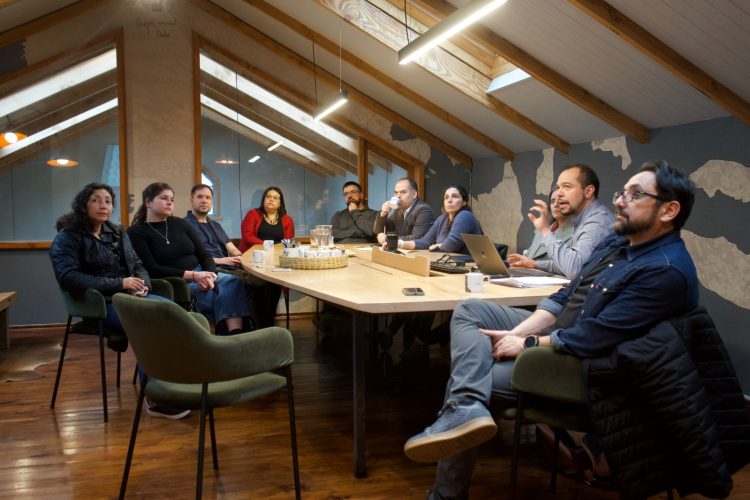
The report is the result of a collaborative workshop held during the Caligidosis Congress, which brought together 175 representatives from production companies, the scientific community, service providers, and regulatory authorities. Over three days, participants analyzed academic, technical, and regulatory challenges related to parasite control, applying a systematic methodology to generate concrete proposals.
“The document delivered to Sernapesca summarizes the outcomes of a workshop that emerged as an invaluable opportunity during the recent Caligidosis Congress,” said Alexander Jaramillo, Intesal’s Health and Safety Coordinator. “This event brought together 175 key stakeholders from industry, academia, service providers, and the public sector to analyze the academic, technical, and regulatory challenges that will help us move toward more effective and sustainable management of this disease. Through collaborative effort and a systematic approach, we were able to synthesize the workshop’s results into this report,” he explained.
The study was positively received by the Service. “It is very important for us to have this document available for review so we can assess the various measures proposed during the workshop. It will also serve as a valuable input for discussions at the caligidosis roundtable with producers, where Intesal’s support will be crucial in presenting and discussing the findings,” stated Osvaldo Sandoval, Head of the Animal Health Department at Sernapesca.
Academia also played a key role in the report’s development. Sandra Marín, Director of the Graduate School at the Puerto Montt campus of the Austral University of Chile, emphasized the significance of bringing together such a diverse group of stakeholders in working groups, which allowed for the integration of different perspectives based on experience and knowledge from various sectors. “It’s important to highlight that this was made possible through interinstitutional collaboration and the shared interest of stakeholders in addressing this cross-cutting issue in the salmon farming industry,” she said.
Cristian Gallardo-Escárate, academic at the University of Concepción and Deputy Director of the INCAR Center, stressed that the report reflects the interaction among the convening institutions. “It is undoubtedly a roadmap for the coming years and future events, highlighting the key areas where we must focus efforts to make the industry more sustainable in addressing caligidosis,” he noted. Dr. Gallardo-Escárate was accompanied at the report’s delivery by researchers from the “Aquaculture Genomics” line: Dr. Valentina Valenzuela-Muñoz, Dr. Diego Valenzuela-Miranda, Dr. Yeny Leal Acosta, and Dr. Antonio Casuso Cabrera.
Looking ahead, Chile will host the XIII International Sea Lice Conference—the world’s most important scientific event focused on sea lice research affecting salmonids. The conference will take place from November 30 to December 4 in the city of Puerto Varas and is expected to gather around 300 national and international participants.
The program will feature keynote lectures, scientific sessions, oral presentations, poster exhibitions, technical-commercial talks, and thematic workshops, all aimed at sharing findings, discussing common challenges, and developing joint strategies to address this complex health issue.